Your Boss Can See How You Use AI Now

TL;DR Zapier has built a platform that lets your boss monitor how many AI tokens you're burning and whether you're actually getting results. It's the latest evolution of "bossware," and while it could help cut AI-generated busywork, it also risks turning every Copilot prompt into a performance metric. The golden middle ground between "not using AI enough" and "using too much" is about to get very uncomfortable.
This is Kludder of the week!
Are you one of those people diligently using Microsoft Copilot at work, without actually getting anything out of it?
Soon, your boss might be monitoring that.
The adoption of artificial intelligence has been rapid. According to the Norwegian research firm Samfunnsøkonomisk Analyse, 55 per cent of Norwegian businesses say they use AI today, and that number is unlikely to be heading down.
But the eternal question is whether employees are actually using the technology – and not least whether they're getting any real results from it.
One way to measure that is tokens.
The new currency
When you use generative artificial intelligence, the language models use tokens to process data. Tokens are tiny data units, broken down from larger chunks of information. Language models like ChatGPT, Claude or Copilot process tokens to learn and understand the relationships between them.
Now Zapier, which provides a platform for automating AI services, has built a platform for monitoring employees' AI usage. This is where tokens come in.
Using AI to generate a text, troubleshoot or produce a report comes at a cost. And this is what Zapier wants to let businesses oversee. One way of doing that is to monitor which employees are using tokens, and then assess whether it's actually delivering any efficiency gains.
Employees with high token usage that don't appear on the list of the most productive employees, might be an indication that their focus lies elsewhere.
They could be using them on side projects. They could be using it on their own, startups, side hustles, whatever. There’s going to be a lot of abuse. – Guillermo Rauch on employees' AI usage, to the Wall Street Journal
While businesses are working tirelessly to roll out AI tools for their employees, others have come far enough that they want to see what's coming out the other end. The expectation now is that companies will start sharpening their AI usage – among other things by setting guidelines for which models you can use for different tasks.
This development falls in line with the various ways employers can measure their employees' work output. During the pandemic, companies started measuring keystrokes and how long employees were away from their PCs. Many of these tools are, thankfully, illegal in Norway. But it's still widespread enough around the world that it has its own name: Bossware.
Some people need a nudge.
Share this post with someone you think might enjoy it!
Amazon is rolling out facial recognition at its offices. They want to put an end to employees working from home, or coffee badging - where employees pop in for a few hours before leaving again. With new AI tools, they can get a full overview of which employees are at which location and at what time.
 Pranav Dixit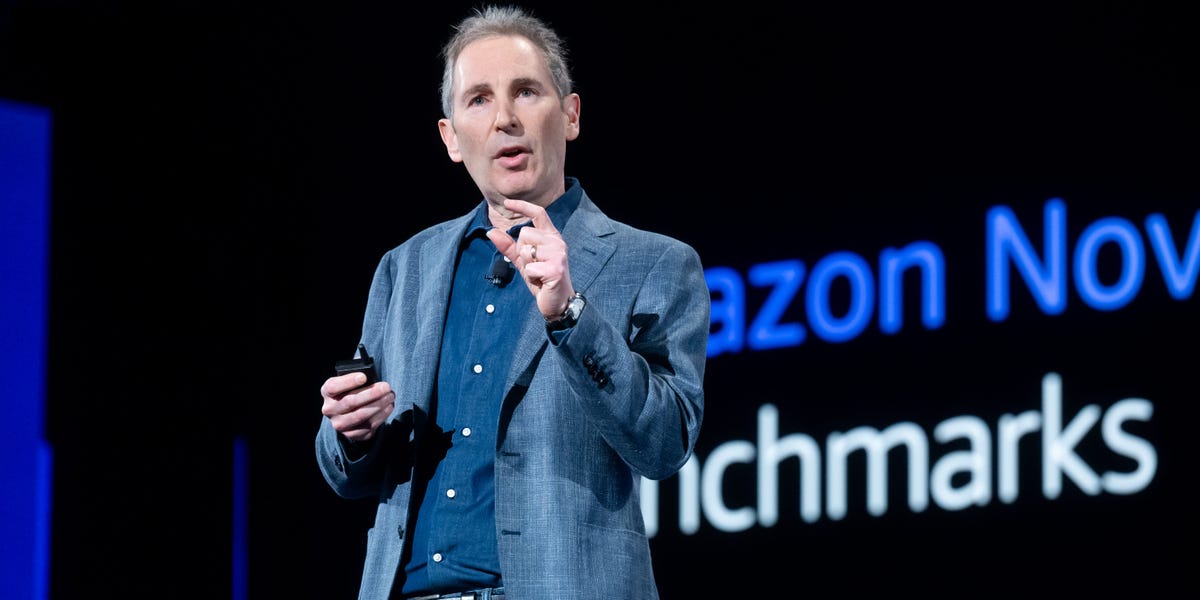
It's a development that worries me. With every new tool a company introduces, it helps normalise surveillance. I'm afraid that what's considered unacceptable in Norwegian and European offices now will, in time, come to be seen as perfectly reasonable – compared to more extreme tools.
In an interview with the New York Times, a Stanford professor expresses concern about what this could do to working environments and employees' sense of security:
It’s obvious that the introduction of ‘bossware’ further tilts the power imbalance between supervisors and workers in favor of those with already considerably more power. – Reich.
The end of workslop?
The threshold for creating work has become much lower since ChatGPT arrived in our offices. And it's turning into a money pit. AI-generated presentations, KPIs and tasks are costing businesses millions annually. I've previously written about this kind of "workslop" here:
 Sebastian Parry-Jones Øyrehagen
So if I really try to look at this with an optimistic eye, this type of tool that Zapier is rolling out – combined with stricter requirements around which AI tools are used when – could help reduce the amount of workslop.
But this kind of monitoring has a darker side to it, too. It will no longer be OK to experiment with AI. High token usage gets flagged, and your work will be closely scrutinised. Too low token usage and it might look like you're not following the company's stated strategy to increase the use of artificial intelligence.
So it's up to you to find a golden middle ground. Be the kind of employee who would never dream of misusing Copilot tokens to plan a holiday. But finding that balance won't be easy – I suggest using AI for it. Just hurry up, before the token-o-meter gets introduced.
Careless AI-use might put you in the danger zone.